
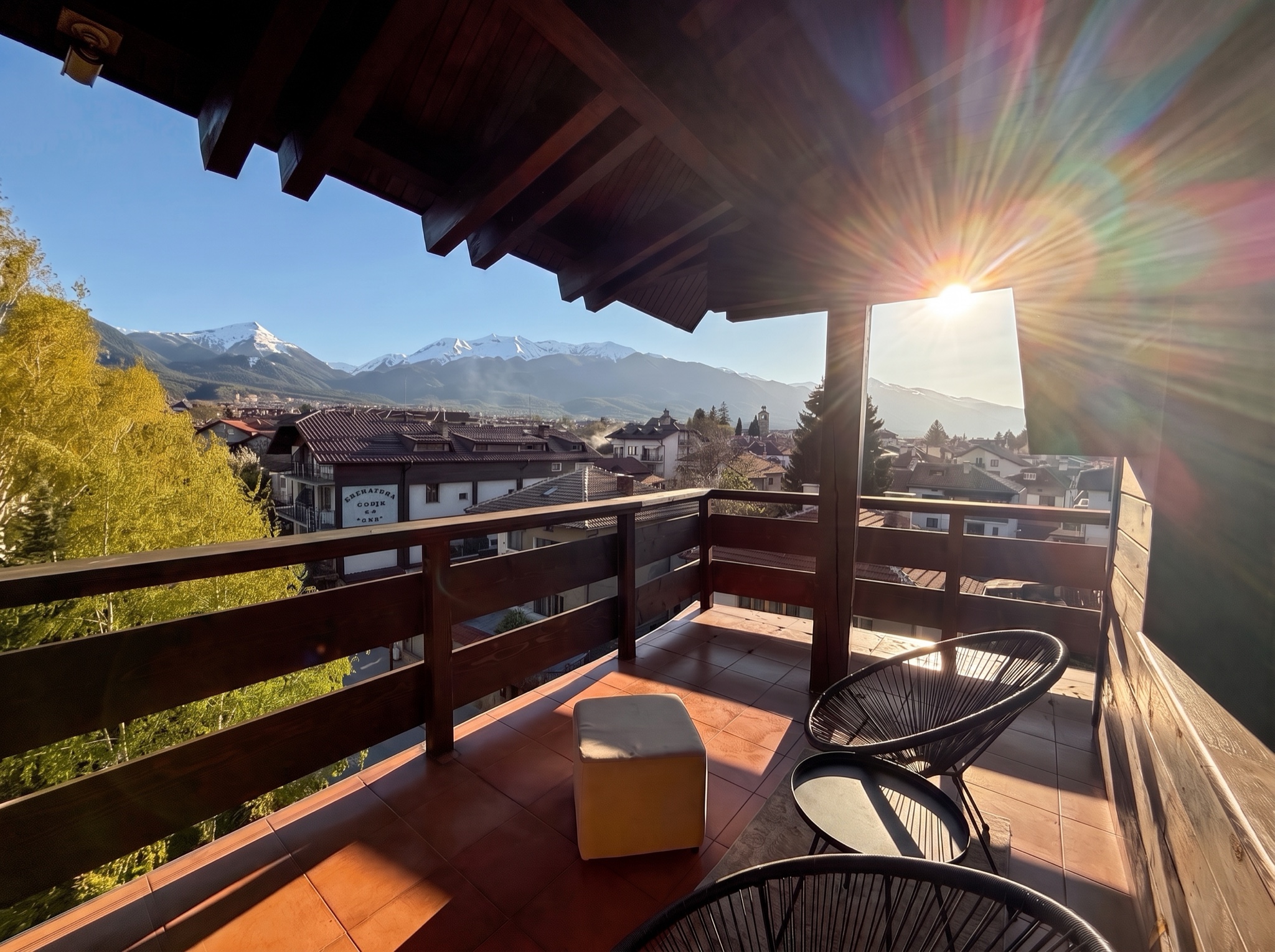
5 June 2026
Pirin National Park: the trails to walk from Bansko
Pirin is not just Bansko’s backdrop — it is the reason the town exists. Marble ridgelines, more than a hundred glacial lakes, and forests hiding trees a thousand years old: there is a reason Pirin National Park has been a UNESCO World Heritage site since 1983. Here is our guide to the trails, ordered from easy to summit, starting at the hotel door.
Before you set out
Three rules the mountain does not forgive you for forgetting:
- Weather turns in an hour. Even in August, carry a jacket and check the forecast each morning — our reception tracks it daily.
- Water and sunscreen. Above the treeline there is no shade.
- Start early. Pirin’s summer storms arrive in the afternoon; those who left at seven are drinking coffee at the hut when the rain comes.
Breakfast at the hotel starts early and is included in your rate — and for full-day routes the kitchen can prepare a packed lunch. Tell us the evening before.
Easy: walks from the doorstep
- St Nikola and the meadows above town (1–2 hours). A gentle climbing path with a panorama over the whole town and Todorka peak. The perfect first afternoon.
- Baikushev’s pine (30 min off the Vihren hut road). A Bosnian pine roughly 1,300 years old — Bulgaria’s oldest tree and one of Europe’s oldest. Go, pay your respects, be back for dinner.
Moderate: the lakes
- The Banderishki lakes (half-day from Banderishka Polyana). A chain of glacial lakes at about 2,200 meters, with Muratovo and Ribnoto as the stars. In July the shores are flowering meadows.
- The Eye (Okoto) — the deepest of the Banderishki chain, dark blue and almost perfectly round. The name is no accident: seen from the ridge, it really does stare back.
Take our morning shuttle to the gondola, ride up, and the whole day is yours. Walking back down through the forest is a pleasure of its own.
Summit: Vihren
2,914 meters. Bulgaria’s second-highest peak. The classic route starts at the Vihren hut, climbs the southern slope, and takes about 3–4 hours up at a good pace. The path is rocky and steep in places but requires no alpine skills in summer — just solid boots, an early start and respect. From the top you see half of Bulgaria: Rila and Musala to the north, the Rhodopes to the east, and on a clear day all the way toward the Aegean in the south.
For the experienced: the Koncheto ridge between Vihren and Kutelo is one of the most spectacular places on the Balkans — a narrow marble catwalk with voids on both sides. Experienced hikers only, dry weather only.
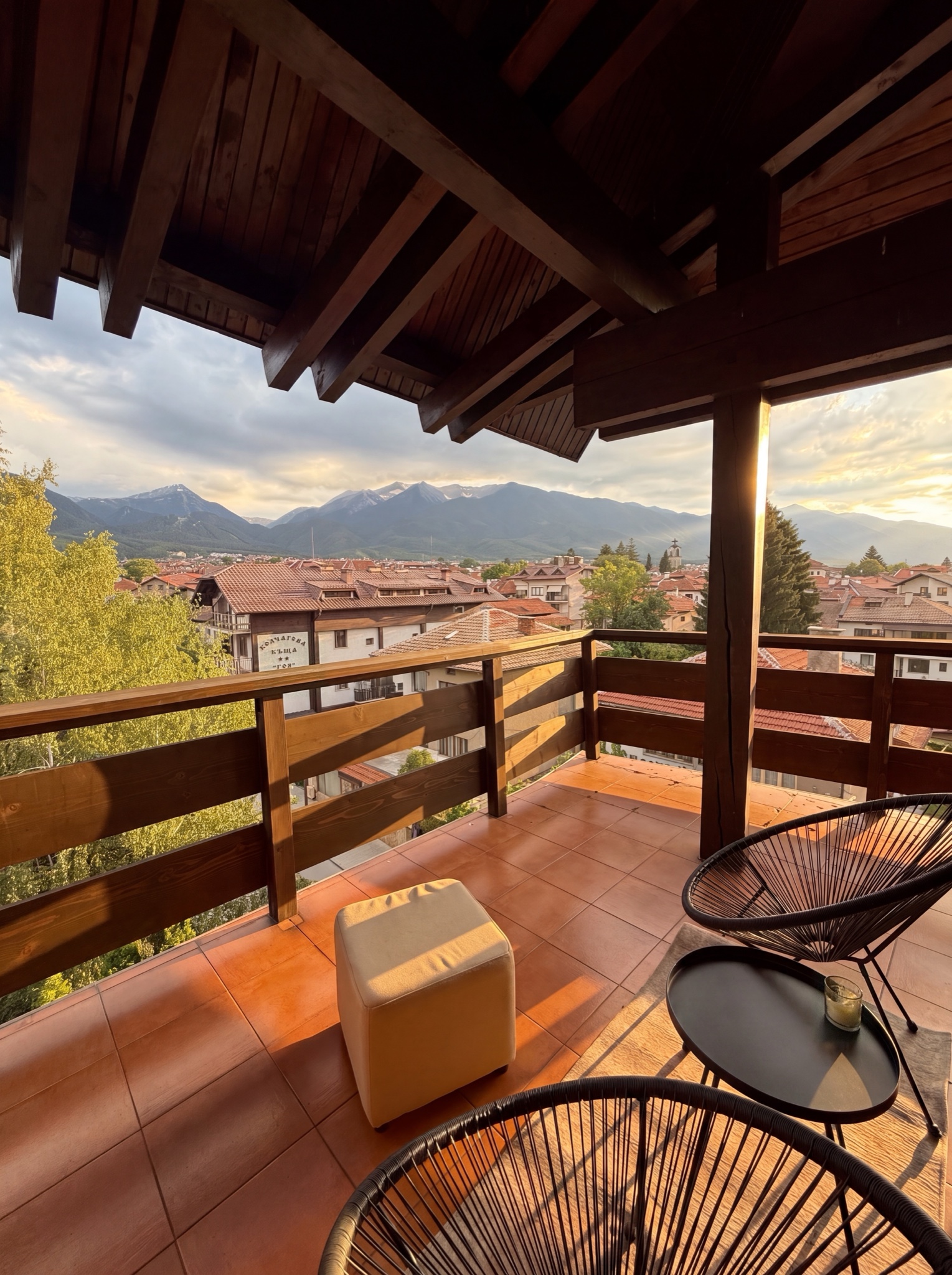
After the mountain: the homecoming ritual
The real reward of a Pirin day comes at 5 p.m., when you cross the hotel threshold: an indoor pool for tired legs, a sauna for the back, a steam bath for the lungs — all included in the rate. Then a buffet dinner where mountain hunger finally meets a worthy opponent. There is no better pairing than ten kilometers of trail and a dinner you don’t have to think about.
When to come
Gear and safety
Pirin is a generous but serious mountain, so a short, non-negotiable list: shoes with real grip and ankle support (trainers end at the treeline), two liters of water per person on a full-day route, a jacket even under a clear forecast, charged phones and the emergency number 112 memorized — and for Koncheto and the high ridges, go only with experience or a guide. Mountain rescue here is not a cliché but an institution, and we respect it by not creating work for it.
The three levels of a Pirin day
How we match guests to routes by legs and mood:
- Green level — the meadows and lanes around town: up to two hours of walking, no gear, a café at the end.
- Blue level — the lakes: half to a full day, proper shoes and water, views that fill a phone.
- Red level — the summits: a full day, an early start, fitness and respect required, memories issued for years.
Bansko’s great trick is that all three levels start from the same breakfast and end in the same pool.
Quick answers
- Do I need a guide? For the green and blue levels — no, the trails are marked. For the summits a guide is a sensible investment on a first ascent, and for Koncheto a strong recommendation.
- Can children manage the lakes? Yes, provided they are used to walking: the route is long but not technical. A carrier for the smallest, and a double dose of patience.
- When is it quietest? Weekdays in June and September — the mountain is nearly private then.
- And if the weather turns? Plan B is always ready: the pool, the old-town museums and the Banya mineral baths work under any forecast.
The season for the high routes runs from late June to late September; the lakes are at their finest in July, and September brings the most stable weather and golden forests. Check available dates, pack your boots and come — the UNESCO mountain begins fifty meters from our reception.